Platanor®, a chance for the plane tree
By André Vigouroux (INRAE)
A species resistant to canker stain

"Since the late 1970s, plane trees have been decimated by canker stain disease and are at risk of disappearing altogether. As a specialist in tree diseases, I investigated the mysteries of this new illness and, realizing that treating infected trees was impossible, I undertook—and in 2004 succeeded in—selecting a resistant plane tree variety, which I named Platanor®. Although it was initially controversial, it should now help secure the future of the plane tree."
The roots of the Platanor® adventure
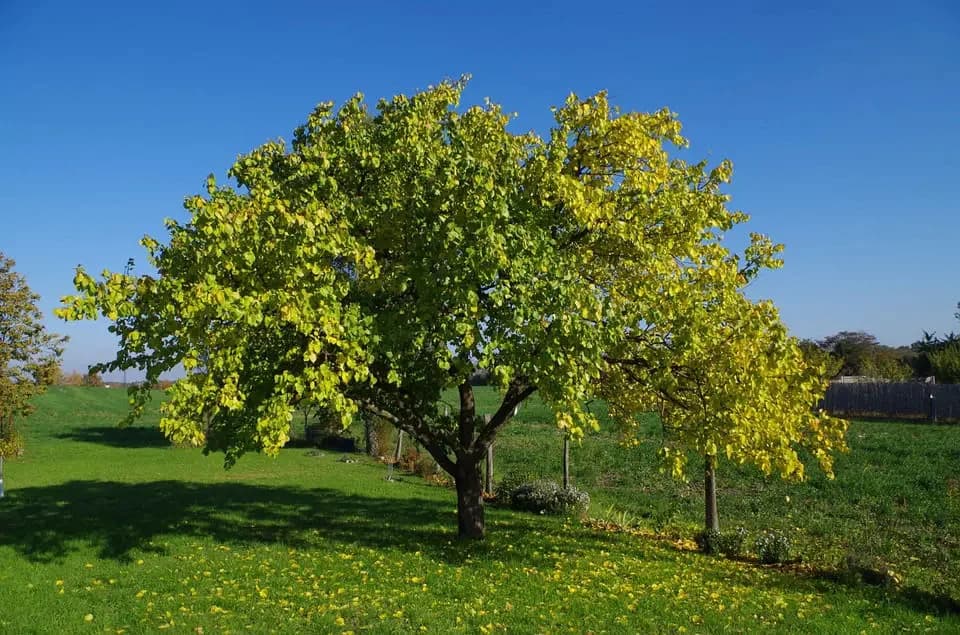
Verticillium wilt of apricot tree
This disease affected many apricot orchards in the Rhône Valley. It is a vascular disease like canker stain. I described its symptoms and its development in the tree starting from the soil. Recovery from one year to the next in partially affected trees was demonstrated. The influence of cultivation conditions (fertilization, tillage, previous crops) was highlighted.
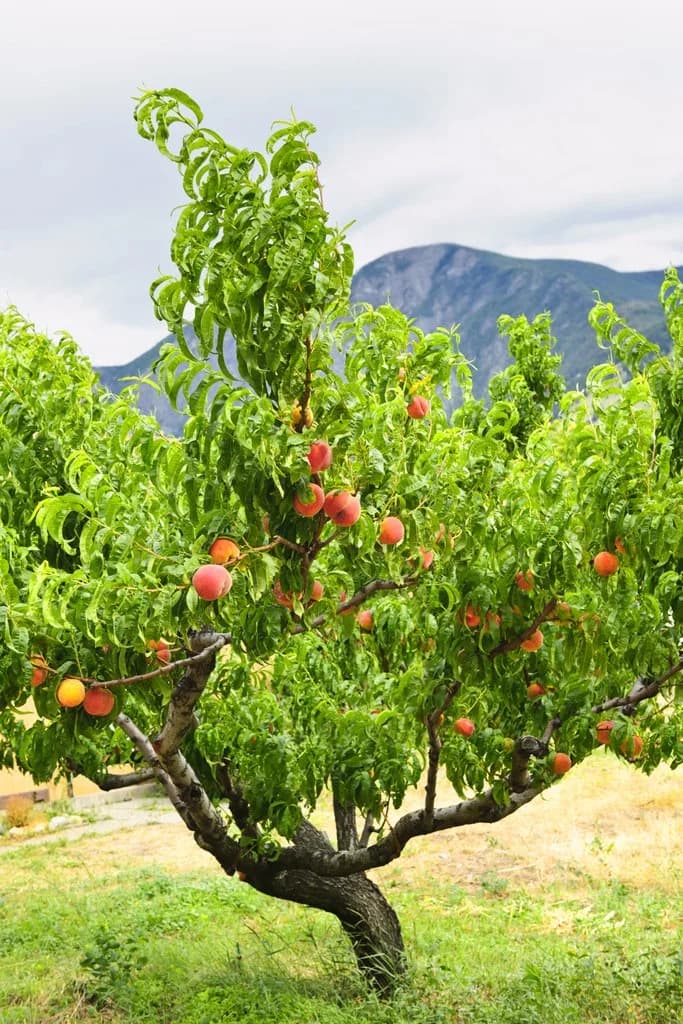
Bacterial decline of peach tree
When a mysterious disease decimated peach orchards in Ardèche and then in the Rhône-Alpes region, I established the diagnosis and described a new bacteriosis linked to a type of Pseudomonas syringae (in collaboration with INRA bacteriologists in Angers). Since environmental conditions were clearly involved, I highlighted the combined impact of soil and climate on the severity of the disease. This focus on soil conditions once again prepared me for the study of soil infection by the agent of canker stain.
The Scourge from America: Canker stain
A worrying emergence
Introduced from America in 1944 through wooden crates made of plane tree, plane tree canker stain remained unnoticed until the 1970s. It was in Marseille, in 1974, that the fungus Ceratocystis platani Harrig. was identified by Mathilde Pichenot, revealing a serious threat to this tree until then considered robust.
Destructive symptoms
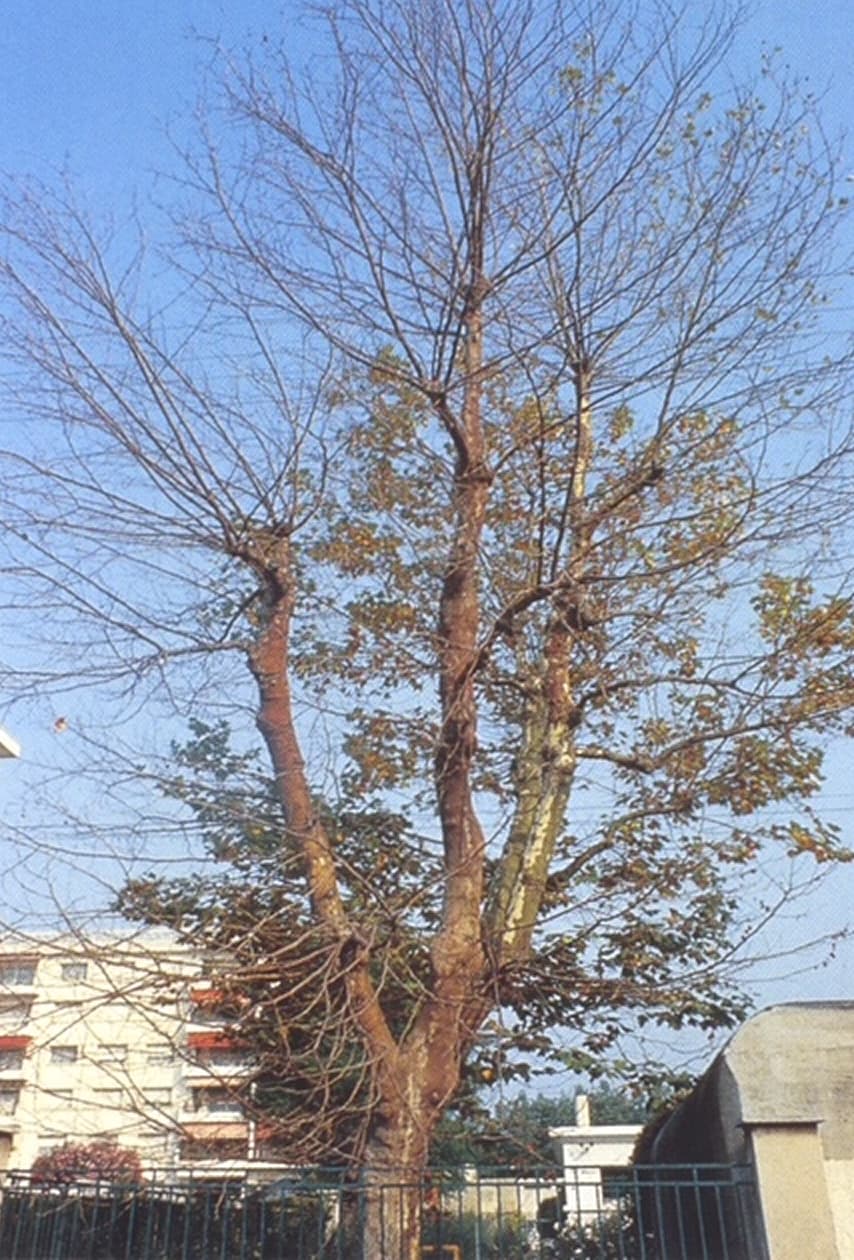
The fungus colonizes the tree’s vascular system, causing bluish streaks to appear on the trunk, the yellowing and sectorial shedding of leaves, as well as the gradual drying of branches. Within just a few years, a majestic tree can be entirely doomed.
Multiple pathways of spread
The disease is transmitted through contaminated pruning tools, earthmoving machinery, and even infected sawdust produced during felling. The fungus also spreads via roots and waterways, accelerating its expansion and making any chemical treatment ineffective.
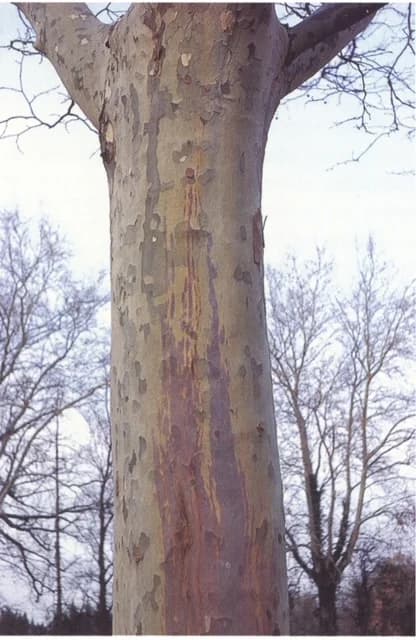
Tree infected by canker stain
Characteristic discoloration of diseased bark
The poster raising awareness against canker stain
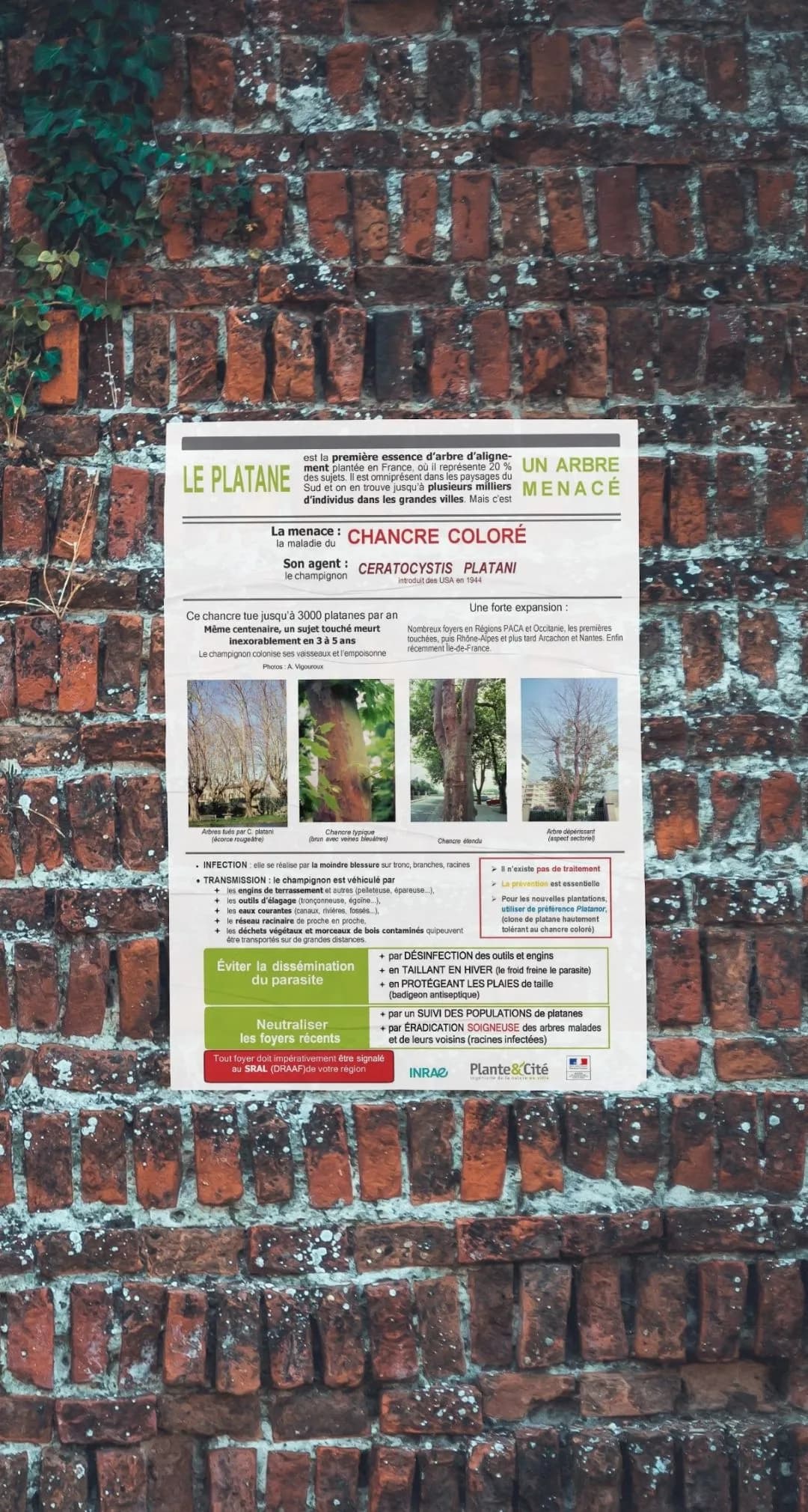
A poster to raise awareness
As early as the 1980s, an educational poster was created with the support of the Plant Protection Services and the association Plante et Cité. Its purpose was to inform the general public about the symptoms of canker stain and to remind them of the essential practices needed to limit its spread.
Visible symptoms in photographs
The poster displays four clear images of the disease’s signs: bluish veins, brown-violet patches on the trunk, sectorial yellowing, and dried-out branches. These visuals enable anyone to become a true detector of infected sites.
A symbol of collective commitment
More than just an informational poster, it has become a symbol of public engagement. It reminds us that the fight against plane tree canker is not only the responsibility of experts, but also relies on everyone’s vigilance.
Platanor®: The story of a birth
Ancient origins
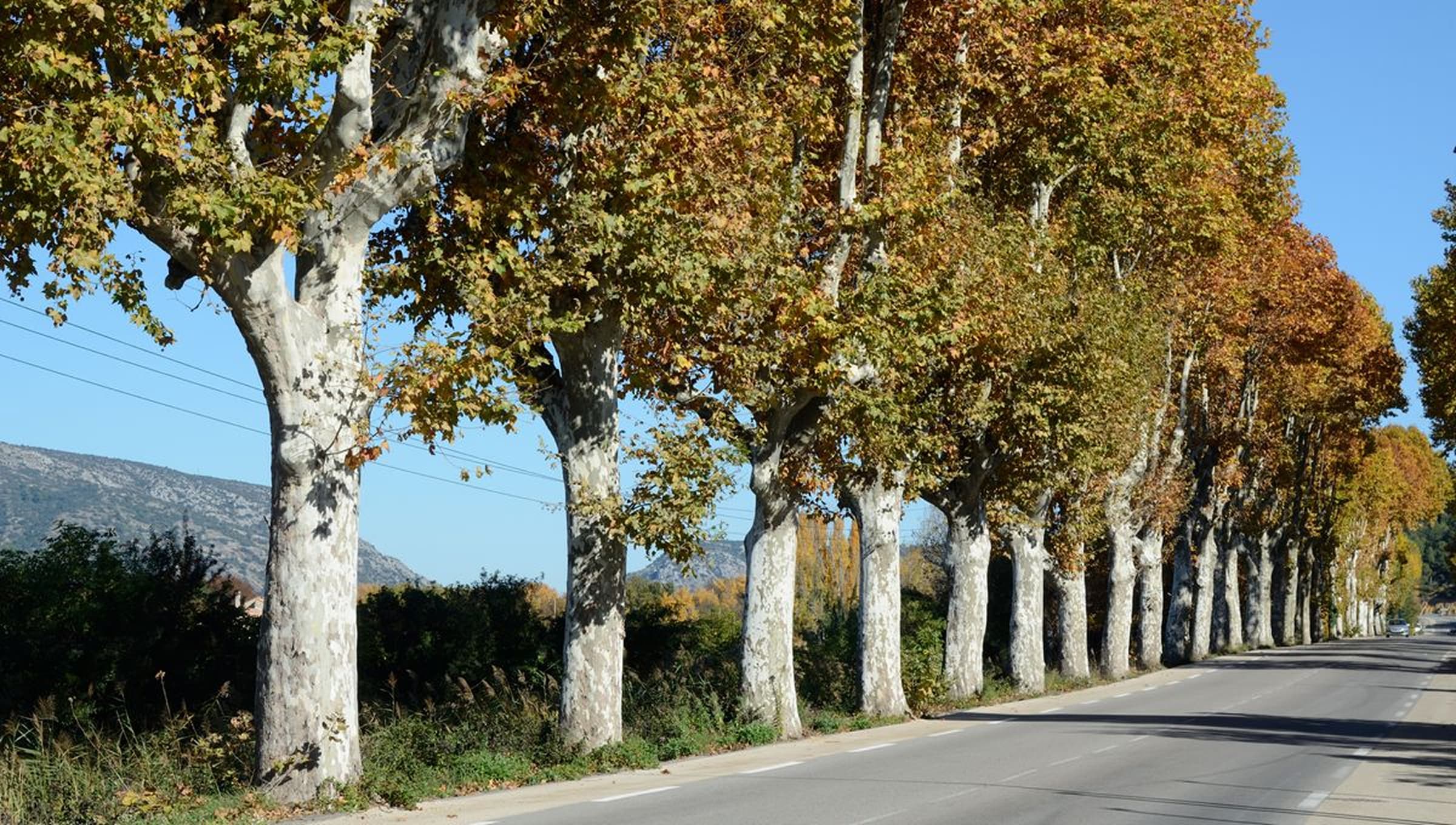
Introduced in ancient times from the Middle East, the plane tree spread across Europe during the Renaissance. Over the centuries, hybrids between several American plane trees (P. occidentalis) and several Oriental plane trees (P. orientalis) multiplied, giving rise to our common plane tree, now widely planted in French cities and parks.
The arrival of canker stain
After the Second World War, the fungus Ceratocystis platani Harrig. was introduced from America into Europe through contaminated wooden crates. Remaining latent for about fifteen years, the disease then spread rapidly, killing thousands of trees within just a few years.
The quest for resistance
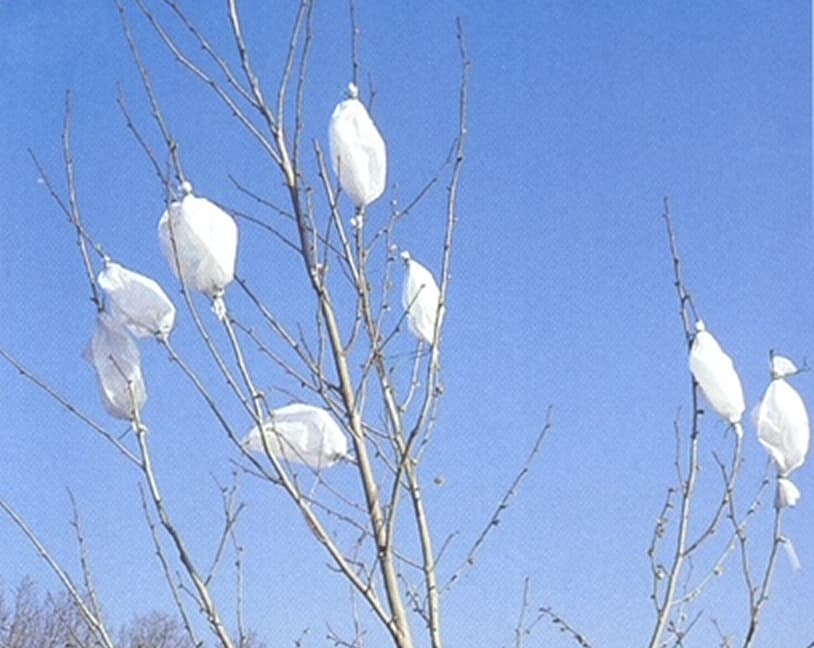
In the absence of any effective treatment, genetic control has become indispensable. Researchers then turned to the United States, the birthplace of the disease, where a few resistant plane trees had been identified. These specimens served as the basis for long cross-breeding programs with the oriental species.
A careful selection
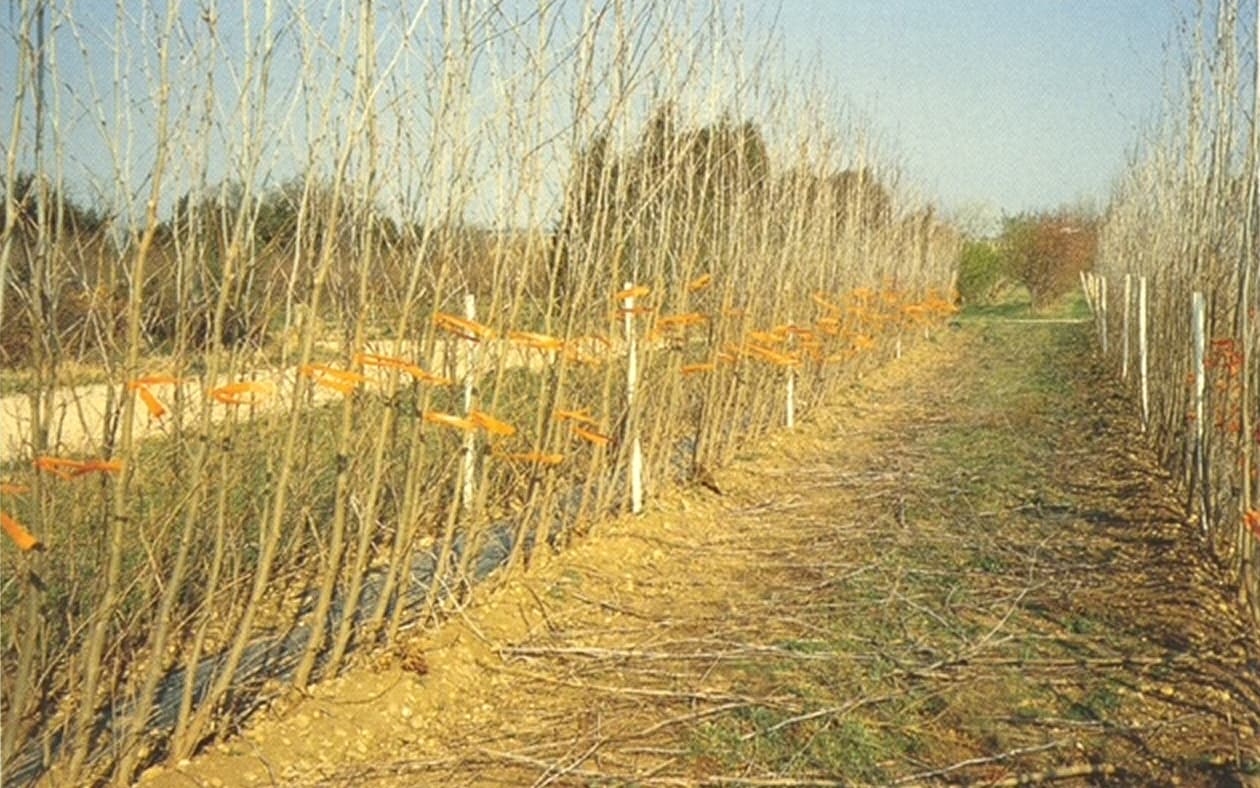
Thousands of seedlings resulting from hybridizations are tested through controlled inoculation. After more than a decade of experiments, only three resistant trees emerge, one of which is able to completely block the parasite, both in the trunk and in the roots.
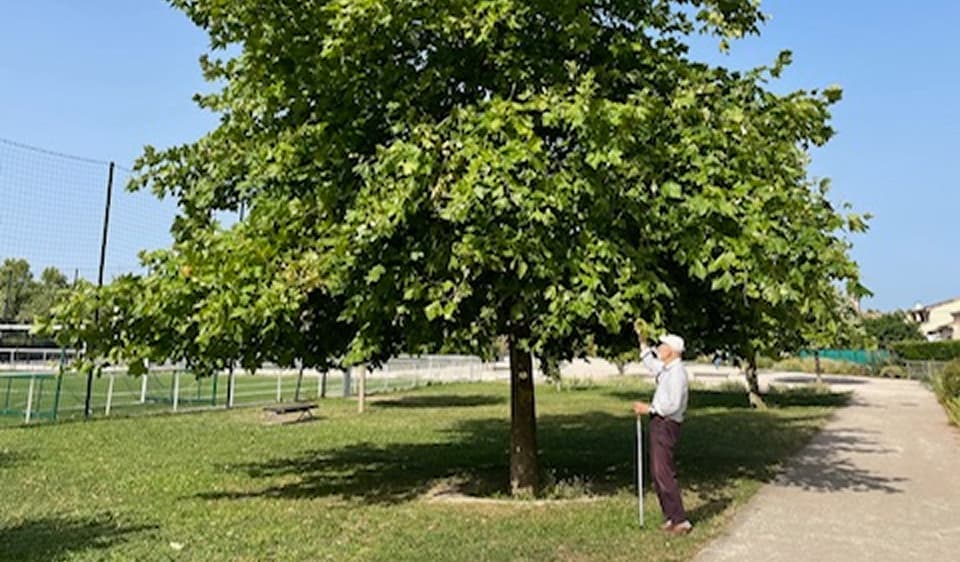
The birth of Platanor®
This exceptional clone, named Platanor® Vallis Clausa in tribute to the Vaucluse region, marks a major breakthrough. Released on the market in 2006, it embodies the hope of sustainably preserving France's landscape heritage against canker stain.
Platanor® : The moment of truth
The scientific and field validation of an arboricultural revolution
Tests under real conditions
The validation of Platanor® is based on a rigorous scientific approach: its results were published in 2004 in the journal Forest Pathology, an international reference in forest pathology. This work details the steps that confirmed its resistance to canker stain.
Conclusive results
Among the 960 hybrids produced from cross-breeding, only 18 individuals withstood the first two inoculations. After further tests on trunk and roots, a single tree demonstrated total and lasting resistance, confirming its exceptional nature.
Successful deployment
Since its selection, Platanor® ‘Vallis Clausa’ has been distributed and planted across Europe, in urban avenues, parks, and sensitive sites. It retains all the aesthetic and functional qualities of the plane tree while offering unique genetic resistance.
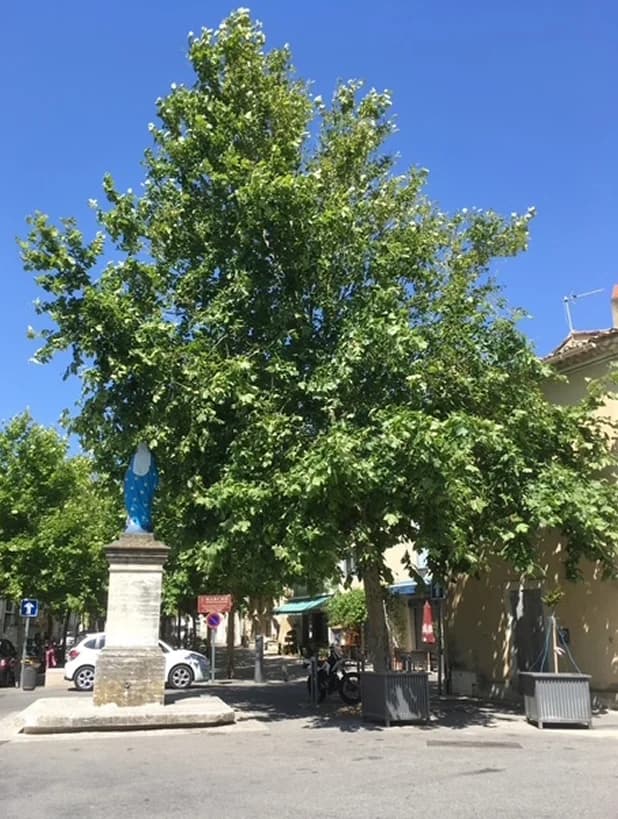
A lasting success
Platanor® trees demonstrate their ability to resist canker stain while retaining the aesthetic and functional qualities that make the plane tree so appreciated.
A scientific victory
This international recognition marks a decisive step: Platanor® is not only the result of thirteen years of selection, it is proof that a lasting genetic response to canker stain exists. It embodies the union of science, perseverance, and the protection of our arboreal heritage.
Platanor®: The tree with many faces
All the qualities of the traditional plane tree, with resistance as an added strength.
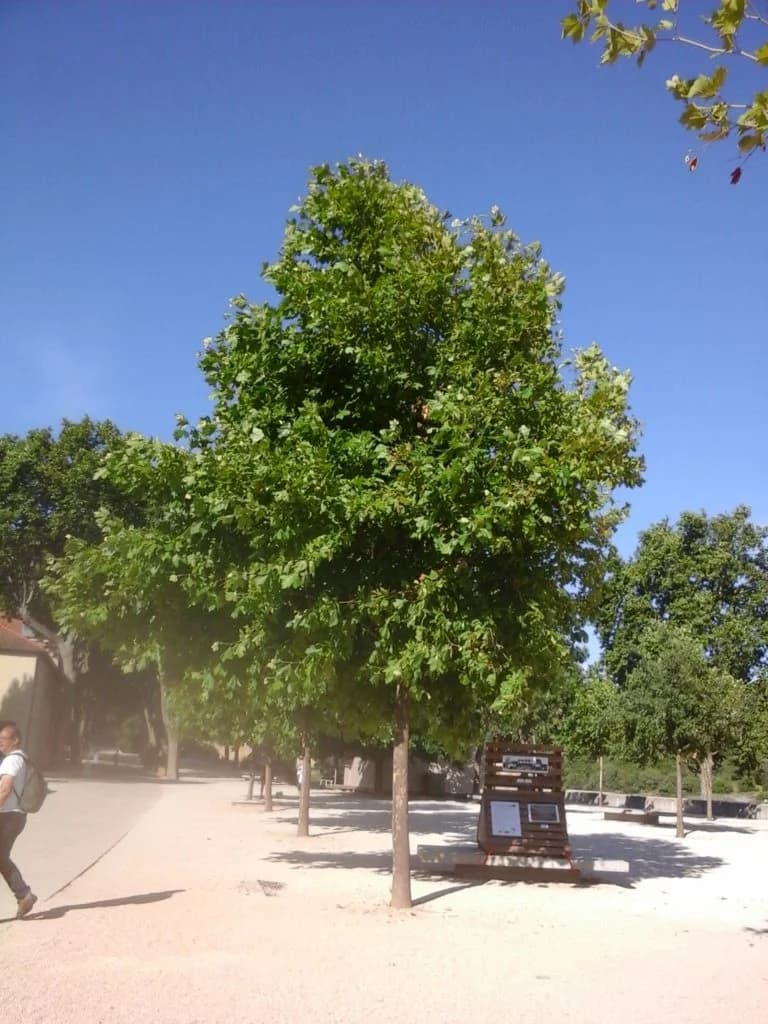
An iconic tree preserved
Released on the market in 2006 and patented in Europe, Platanor® retains the appearance and uses of the traditional plane tree.
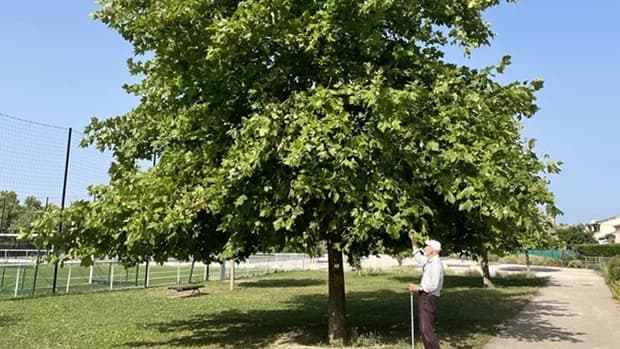
Exceptional hybrid vigor
Thanks to the cross between oriental and American species, Platanor® shows superior growth and longevity.
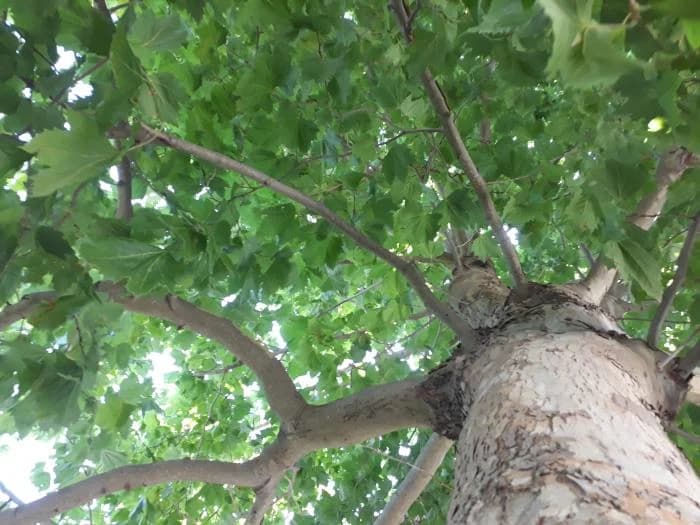
Disease tolerance
Beyond canker stain, Platanor® also shows strong resistance to anthracnose, which weakens young leaves.
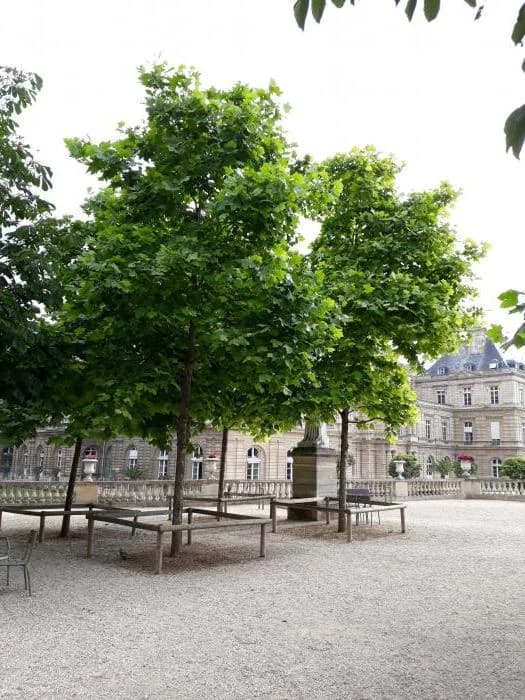
Lasting resistance
Its polygenic resistance, derived from multiple genes, ensures reinforced protection over time.
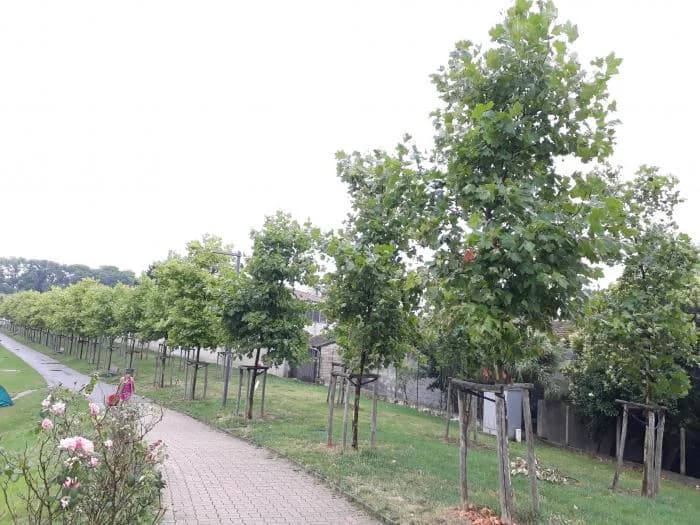
A rare botanical heritage
Botanically speaking, it should first be noted that the plane tree is a true living fossil: a single plant bears both sexes, but separately, in the form of inflorescences (elementary flowers clustered into small balls, cf. video below) — distinct male and female inflorescences borne on the same branch. This allows the plane tree, in crosses, to play the role of either male or female parent. On this basis, Platanor® belongs to the large group of hybrids of the Platanus × pyramidalis Rivers type, characterized by slightly wider leaves and single isolated fruiting balls, with the American sycamore P. occidentalis as the female parent. When mature, this type of hybrid remains quite rare in France, with only a few tree-lined avenues found in Paris, Angers, Orléans or Toulouse, compared to the other group of the P. × acerifolia Wild type.
The breeding work carried out to obtain a variety resistant to canker stain logically led to Platanor®. But the 13 years of selection and the 15 years of planting also revealed unexpected characteristics: exceptional hybrid vigor, tolerance to common diseases, and lasting resistance. All these qualities enhance Platanor®’s image and make it a remarkable tree in more than one respect.
The Man Behind Platanor®
Meet André Vigouroux, the visionary scientist who dedicated his career to saving the plane tree
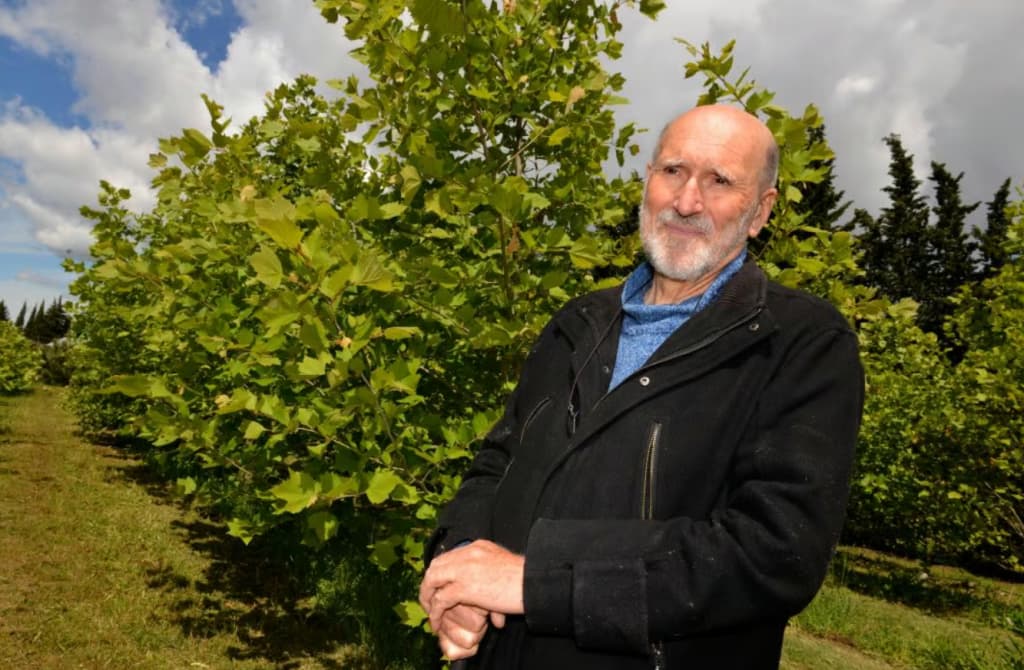
André Vigouroux, honorary research director at INRAE, devoted his life to understanding and protecting trees against diseases. Passionate about fieldwork, he conducted numerous studies in the orchards of southern France, highlighting the role of soil, climate, and cultivation practices in tree health.
In the 1970s, when plane trees were being decimated by canker stain, he launched an unprecedented genetic research program. After 13 years of experimentation and selection, he created the Platanor® a plane tree that is both vigorous, elegant, and resistant to the disease.
Author of “Le Platane : portrait, botanique, maladies”, André Vigouroux embodies scientific rigor combined with a deep passion for nature and the preservation of our urban tree heritage.
INRAE Researcher
Renowned specialist in plane tree diseases and plant pathology.
13 Years of Research
A meticulous selection process to create a plane tree resistant to canker stain.
Scientific Author
Author of The Plane Tree: Portrait, Botany, Diseases and numerous scientific publications.
" To understand tree diseases is, above all, to understand the intimate connection between soil, climate, and plant life. "
platanor-image.title
Questions about Platanor®?
I would like to warmly thank my colleague and friend Jean Pinon, as well as the Conseil Départemental du Vaucluse for its notable contribution to funding the selection of Platanor®.